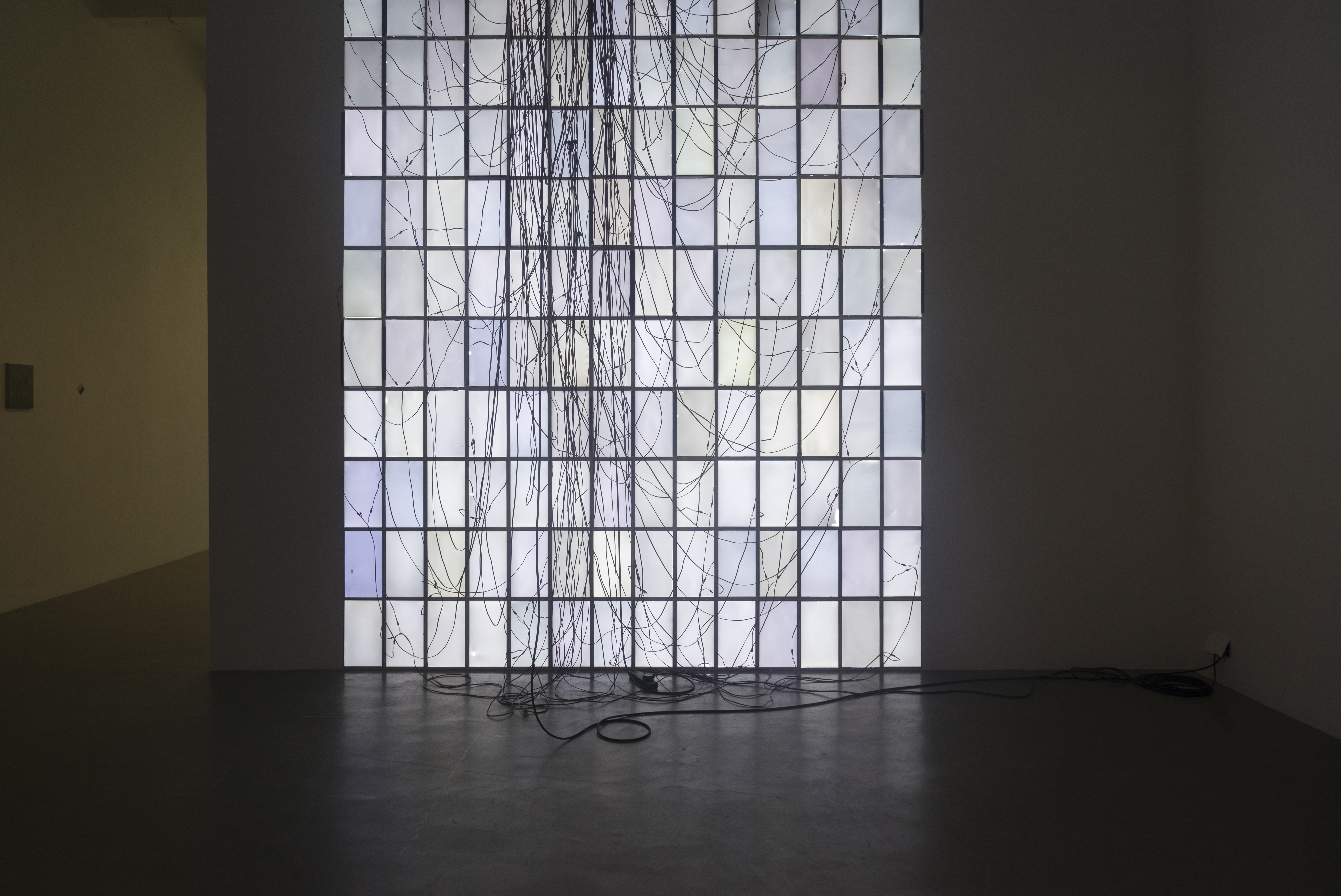
The Gate, 2019


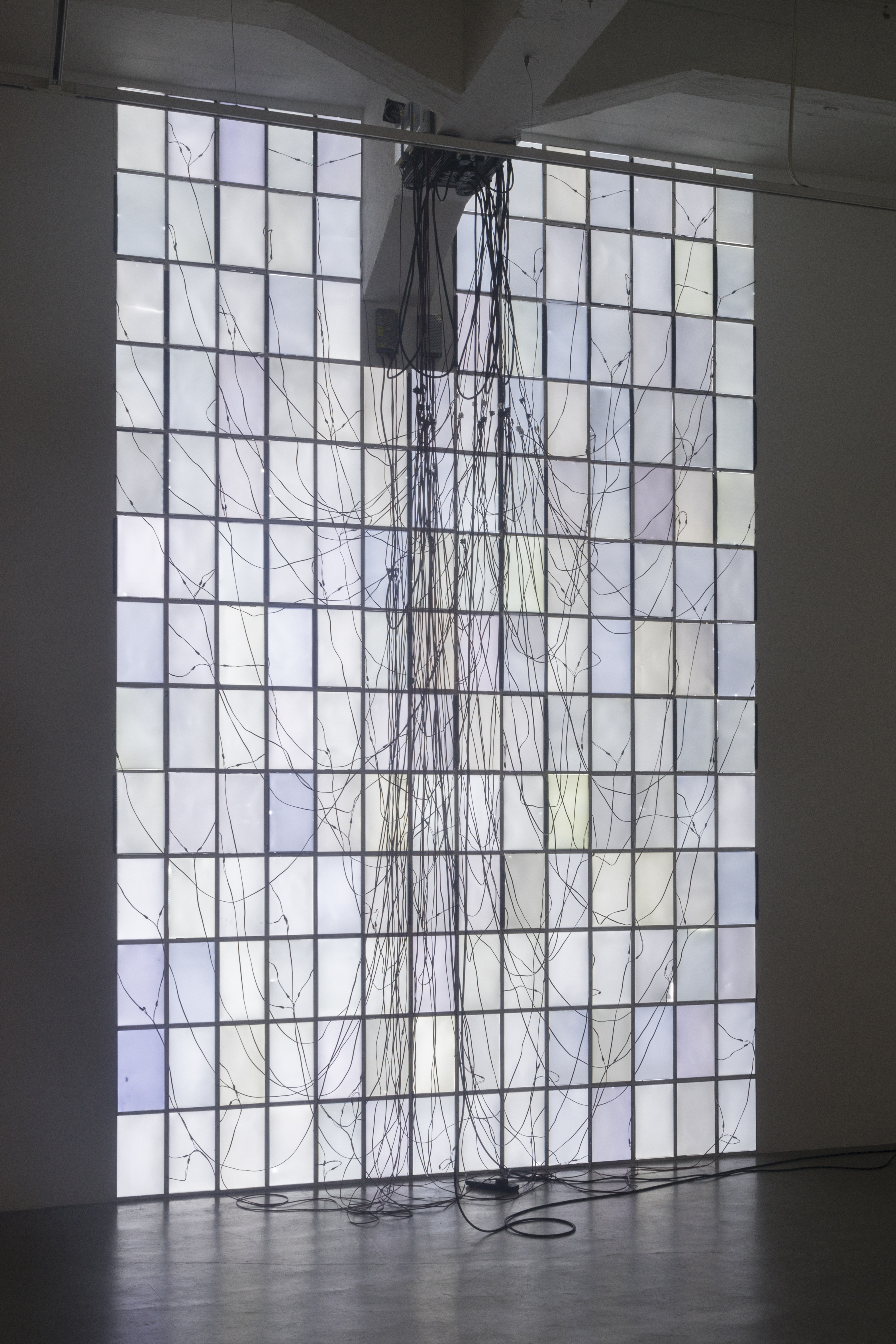

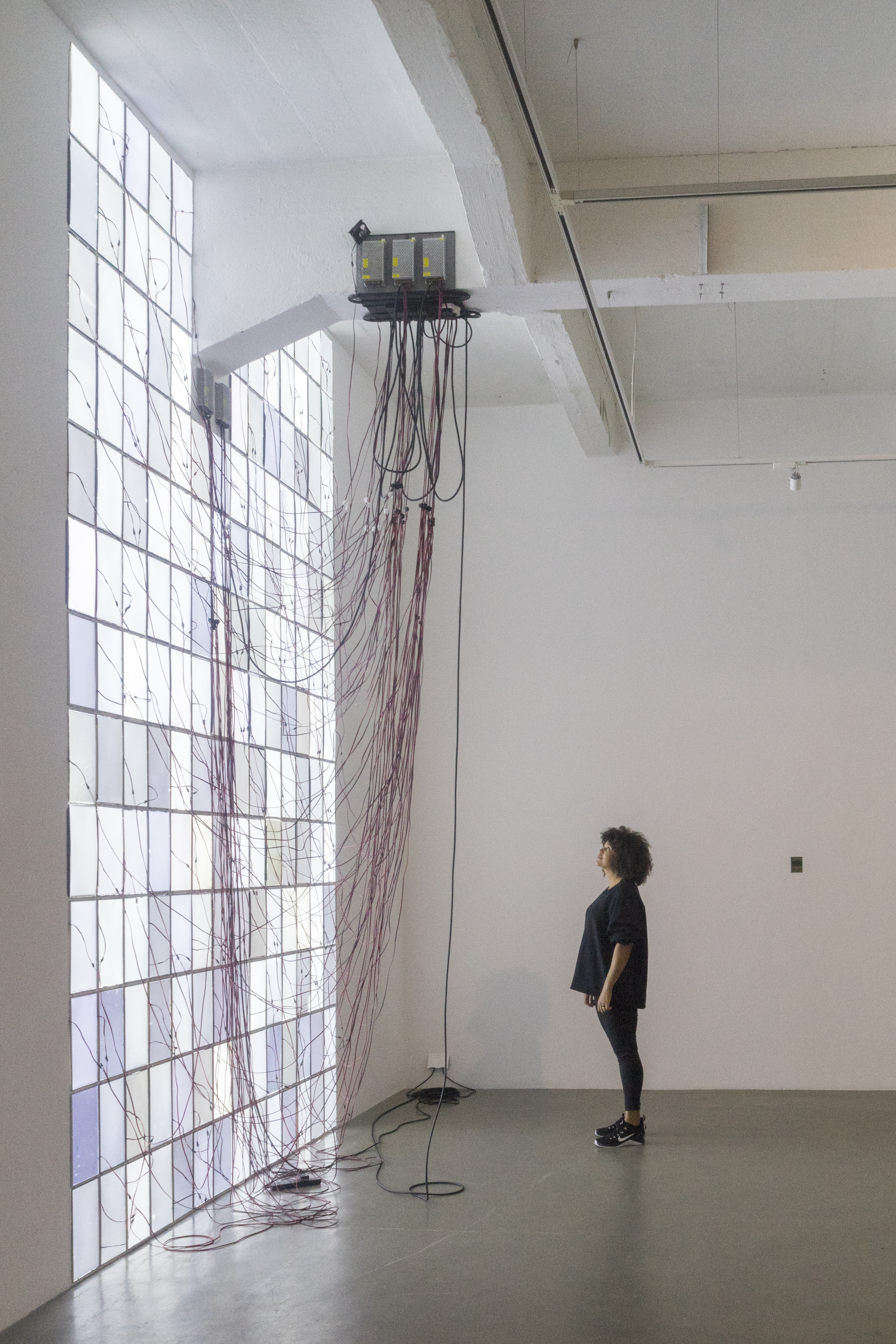
The Gate grew from discarded laptop screens whose original function had become obsolete. Individually insignificant and marked by their previous use, the screens are modified to retain only their backlights, then brought together into a single field of light.
The work develops through a tension between modularity and emergence. Each screen remains distinct, with its own colour, traces and imperfections, yet together they form something larger than their parts. The visible cables resist the illusion of a seamless surface: branching and gathering like roots, veins or intestines, they expose the network that sustains the light and connect the work directly to the architecture around it.
Site-specificity is central to the installation. The grid responds to the proportions and structures of the building, allowing the work to become part of its surroundings rather than simply occupy them. Light falls from the height of the installation into the space, creating a moment of suspension and stillness.
What begins as electronic waste becomes an opening of sorts—a threshold between the material and the immaterial, the individual and the collective, the functional and the obsolete. Its power comes partly from this transformation: nothing has been made precious, yet together the discarded parts produce something unexpectedly expansive.
These slow fallings apart, and then these sudden ones, incredibly quick, like sudden gusts of wind. Then quiet. The big crack with its big light, then the slow imperceptible avalanche, and then these sudden fallings apart. And then the stones, grey like the fog, but still with a faint light in them instead of nothing, a little of nothing's light, so weak, so almost like ashes, so almost like glowing ashes on stone. And then the stone on stone. I am in the room behind the wall the stones are laid in, my stones, other people's stones, and there's light in there, the strong invisible light that comes across from the sky and around the stones. The light of nothingness. The light of nothingness in the stone. The light of love in the stone.
Jon Fosse, Scenes from a childhood, Fitzcarraldo Editions, London 2018.
Modified LED laptop screens,
power supply, cables
490 x 130 x 475 cm
︎
Photos @Katrin Hanusch
power supply, cables
490 x 130 x 475 cm
︎
Photos @Katrin Hanusch